
Flowers with Benefits: The Weeds You Want to Keep
Most gardeners spot a weed and immediately reach for gloves, trowel, and a look of righteous determination. But not all uninvited plants are plotting the downfall of your garden. Some are quietly doing good work — feeding pollinators, improving soil, and adding a dash of wild charm.
The Royal Horticultural Society and many other horty influencers recommend leaving a corner of your garden to let wild flowers thrive.
Sometimes, what you think of as a troublemaker might be a quiet helper. Instead of waging war on every stray plant, take a moment to identify it — you might discover it’s been working for you all along.
Here are a few “unwanted guests” you might consider letting stay for a while:
Dandelion
Taraxacum officinale

Surprised? Yes, I know, they pop up everywhere, but those sunny yellow faces are one of the early food sources for bees in spring.
By all means, lop off the seed heads once they're about to pop but don't go in all guns blazing to remove them before they have a chance to help out our little garden helpers.
Plus, every part of the plant is edible; the flowers can be used to make honey or tea, the leaves can be used in salad and the roots can be roasted to be made into something similar to coffee. Dandelions are used in supplements and medicines such as blood pressure medication and antibiotics!
Clover
Trifolium spp.

Think of clover as your lawn’s quiet little fixer. Those clusters of green aren’t just lucky — they’re working behind the scenes to fix nitrogen to your soil, keeping your grass and nearby plants healthier without you lifting a finger.
The delicate white and pink blooms are a favourite with bees and other pollinators, especially during midsummer when nectar sources can be scarce.
Clover has also been used traditionally in herbal medicine, often brewed into teas believed to help with coughs and inflammation. And yes — the leaves are edible too, adding a mild, fresh flavour to salads.
Red Dead Nettle
Lamium purpureum

The name sounds fierce, but red dead nettle is actually a gentle spring ally. It’s one of the earliest flowering plants of the year, producing clusters of purple blooms that provide an essential nectar boost for bees when little else is blooming.
The young leaves are edible and can be added to soups, salads, or smoothies for a vitamin-packed kick. Herbalists have long used it for its anti-inflammatory and antibacterial properties.
Plus, its cheerful colour adds a pop of life to garden beds still shaking off winter’s grey. It's certainly one of my favourite weeds.
Plantain
Plantago major
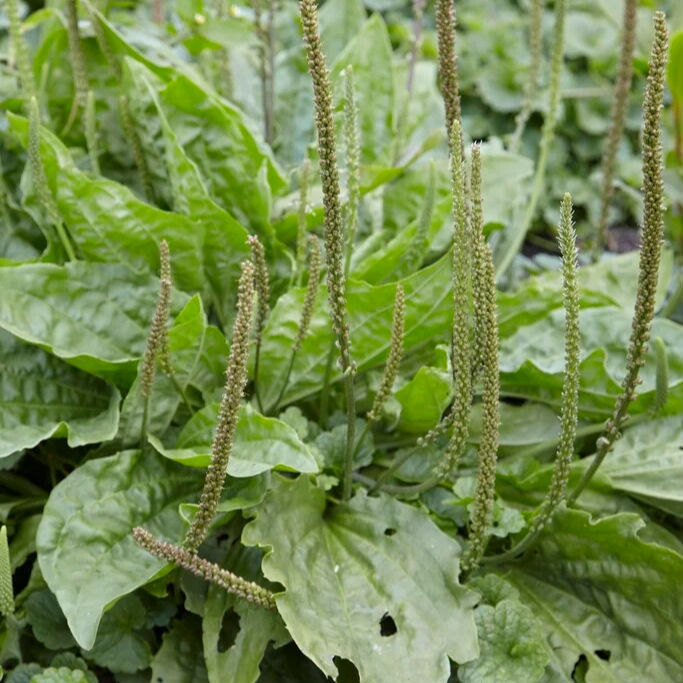
No, not the tropical banana-like fruit! This broad-leaved survivor thrives in compacted soils and along garden paths, where it quietly improves soil quality and stability.
Every part of the plant is useful: the leaves can be applied as a natural poultice for insect bites, minor cuts, and stings, while the seeds are high in fibre and have been used to aid digestion.
Plantain is also a favourite for foragers, with its young leaves being perfectly edible in salads or cooked as greens. Tough, medicinal, and unbothered by heavy foot traffic — it’s the quiet workhorse of the world of weeds.
Forget-Me-Not
Myosotis spp.

These are particularly close to my heart as they were a firm favourite of my Granddad's before he passed.
These dainty, sky-blue blooms bring that cottage-garden charm to any space. Self-seeding generously, forget-me-nots will pop up year after year in surprising places, often brightening borders and paths before many other flowers appear. Any gardener knows how sticky those seed pods can be, I've come home covered in seeds before!
Pollinators adore them, especially butterflies looking for early nectar. While not commonly eaten, they have been used in traditional herbal remedies for lung and kidney health.
And, true to their name, once they find a home in your garden, they’re hard to forget… or remove. Remove-Me-Not!
Not every weed is a villain — some are quietly feeding pollinators, enriching soil, and even offering up a snack or two. Before you pull, pause… you might just be uprooting a garden ally.
“Dandelions, clover, and red dead nettle — garden helpers in disguise. Let’s give these ‘weeds’ some love! 🌿💚🐝 #SurefireGardening #PollinatorFriendly
“Before you pull, pause! Your garden’s ‘weeds’ might be quietly working hard for you. 🌸🌱 #GardenTips #EcoFriendlyGardening”

Comments